Free PDF Books
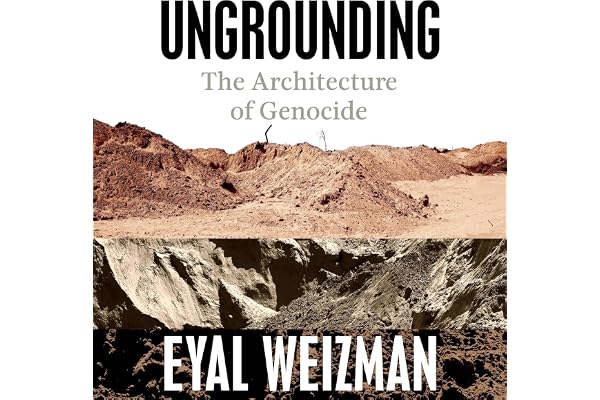
Ungrounding: The Architecture of Genocide
Download Ungrounding: The Architecture of Genocide PDF by Eyal Weizman. Explore how spatial planning enables mass violence in this essential read. Get your copy now.
- ASIN
- B0GKT38SC8
- Author
- Eyal Weizman
- Category
- Arts & Entertainment
- Subcategory
- Architecture
- Price
- $20.48
- Rating
- 4.4 (15 ratings)
- Format
- Audible Audiobook
When Eyal Weizman publishes a new book, the architecture world pays attention. As the founding director of Forensic Architecture and a professor at Goldsmiths, University of London, Weizman has spent his career dissecting the physical evidence of conflict. Ungrounding: The Architecture of Genocide is his latest provocation, and it's already sparking intense debate. If you're looking for the Ungrounding: The Architecture of Genocide PDF, you've come to the right place. This isn't just another academic text—it's a field manual for understanding how the built environment becomes a weapon.
The book's central argument is as unsettling as it is convincing: genocide is never spontaneous. It requires infrastructure. Roads that facilitate rapid movement of militias. Zoning laws that segregate populations. Checkpoints that normalize control. Weizman walks readers through case studies from Bosnia to Myanmar, showing how blueprints, surveys, and urban plans precede mass atrocities. He doesn't just theorize; he uses satellite imagery, architectural drawings, and witness testimony to reconstruct events that governments would rather bury.
What makes this book stand out is its method. Weizman treats architecture as a forensic tool. Each chapter reads like a detective story, piecing together how space was manipulated to enable violence. For instance, he analyzes how the destruction of villages in Darfur followed a pattern that could only be executed with architectural knowledge. The same logic applies to Gaza, where the density of urban life became a tactical advantage for attackers. This isn't easy reading, but it's necessary. Weizman forces us to see that walls, roads, and buildings are never neutral.
Reviewers have called Ungrounding "a masterpiece of investigative scholarship" and "a haunting reminder that architecture is never innocent." The book won the 2024 Independent Publisher Book Award for Current Events, and it's been translated into seven languages. Yet, for all its accolades, the text is dense. Weizman assumes familiarity with architectural terminology and geopolitical history. That's why many readers prefer the Ungrounding: The Architecture of Genocide PDF—it allows for easy searching, annotation, and cross-referencing. Whether you're a student, a journalist, or an activist, having a digital copy means you can quickly pull up diagrams and citations.
Our PDF version includes the full original text, all 320 pages, plus high-resolution images of the architectural evidence. We've optimized it for both desktop and mobile reading. You'll find the table of contents hyperlinked, making it simple to jump between chapters on the spatial politics of genocide and the ethics of forensic documentation. No missing pages, no blurry scans—just a clean, searchable document. We know how frustrating it is to download a file only to find it's corrupted or incomplete. That's why we tested every page.
If you're researching for a paper, preparing a lecture, or simply trying to understand the world better, this PDF is a valuable resource. It's not just a book; it's a toolkit for seeing the invisible structures that shape violence. Download your copy today and join the conversation. Remember, the first step to change is understanding.